


General Info
The Gluteus muscle group, commonly known as the 'Glutes' play a crucial role in hip joint movements and pelvic stability.
Four muscles form the superficial part of the “glutes” - Gluteus maximus, Gluteus Medius, Gluteus Minimus and Tensor Fascia Lata.
The Deep Muscles: The Hip lateral Rotators are the Quadratus Femoris, Piriformis and Gemelli and Obturator Muscles.
Collectively these muscles are involved in hip extension, abduction and lateral or external rotation.
What do I need? View all




Our Expert Physio
Cameron Lillicrap has spent over 40 years on both sides of elite sport, as an international rugby player and as Australian Rugby's Team Physiotherapist, trusted to keep some of Australia's most successful athletes on the field. His practical, focus-on-what-you-can-do approach is why people seek his advice when their rehab isn't working. He knows what's needed to get you back 'in the game'. We asked Cam. Here's what he said...
Q&A with Cam
How often would you treat gluteal muscles in the clinic?
All the time. The glutes, particularly the Gluteus Medius, are involved in almost every lower limb movement you make. They stabilise the pelvis during walking and running, control hip rotation, and keep the opposite side of the pelvis from dropping every time you lift a foot off the ground. Without that control, everything above and below compensates.
That's why weak glutes show up in so many different complaints - Back pain, Hip pain, Knee pain. If someone walks through my door with any of those, there's almost always a glute strengthening component somewhere in their rehab program. It's that consistent.
I’ve got Tendinopathy in one of my glutes? How and why?
Glute Med tendinopathy comes from repeated strain on the tendon over time. It's a load management problem more than a single injury event. I see two very different groups of people with this.
The first is generally deconditioned people, often carrying extra weight, with poor pelvic control and a job that has them on their feet for long periods. The tendon is being asked to do too much with too little support underneath it.
The second is athletes or active people who've ramped up training too fast, a new walking or running program, a return to sport after time off, and the glute med hasn't had time to adapt to the load.
Either way, the symptoms are similar: a localised ache in the buttock that can radiate down the back or side of the leg, sometimes convincingly enough to be mistaken for sciatica. Weak glute med is also one of the most common findings I see alongside lower back pain. It's rarely the only thing going on.
How do I work Glute strengthening into my gym training?
The key is sequencing it properly. Don't just bolt glute work onto the end of a session as an afterthought. Here's how I'd structure it:
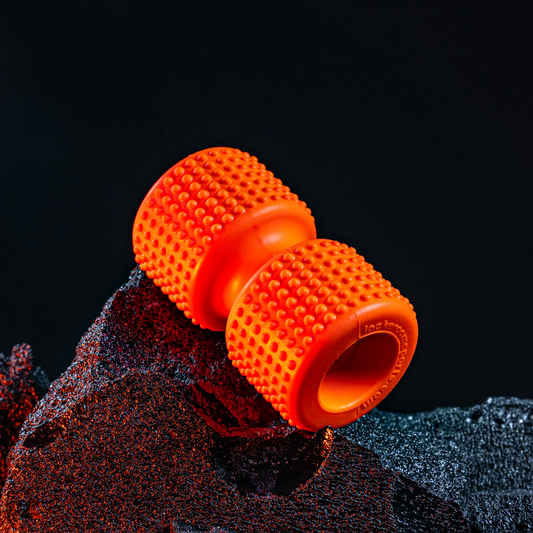
- Release local tightness first with a Pocket Physio Rocket or Pocket Physio MAX before you load up
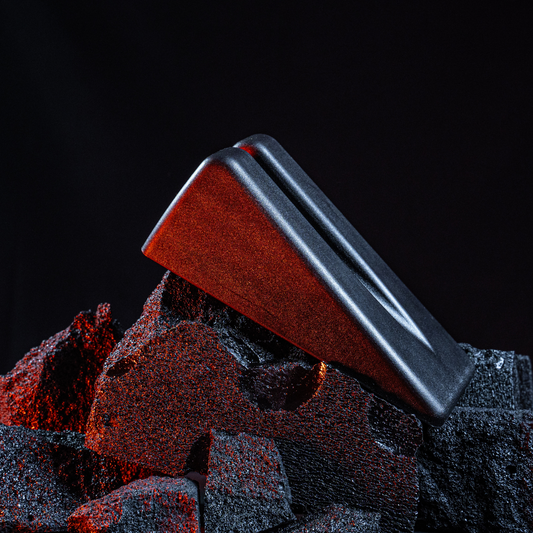
- Open up thoracic mobility with a Posture Pro or Posture Pro Dome - upper back stiffness affects how well the hips and glutes can work
- Activate the abdominals with the Posture Pro Dome to get the whole pelvic system switched on
- Use Mini Bands for glute med, hip rotator, and hip extensor activation before your heavier compound lifts
- Finish with posterior chain flexibility work — hamstrings, glutes — using a Stretchband
Done this way, your heavier lifts, squats, deadlifts, lunges, will feel better and load the right muscles properly. Most people skip the activation work and wonder why their glutes don't fire under load.
Is it possible to tear a Glute muscle?
Yes, though it's not that common as a traumatic injury. When it does happen, it's usually from a sudden high-load movement - a hard fall, a heavy lift, or a violent change of direction.
In older adults it's a different picture. Degenerative tears of the Gluteus Medius are actually reasonably common in the elderly, where the muscle gradually weakens and deteriorates with age rather than failing from a single event. These often go undiagnosed for a while because the symptoms can be mistaken for hip bursitis or general hip pain.
Either way, if you suspect a tear, significant pain, sudden weakness, or difficulty weight-bearing, get it properly assessed. Imaging will tell you what you're actually dealing with.
Related Articles View all
-

Pocket Physio MAX
Who Needs a Pocket Physio Max? Tight muscles don't wait for a day off. They show up mid-run, mid-set, mid-ride. Right when you need your body to do what you're...
Pocket Physio MAX
Who Needs a Pocket Physio Max? Tight muscles don't wait for a day off. They show up mid-run, mid-set, mid-ride. Right when you need your body to do what you're...
Read more -

-

Your Shoulder Isn't the Problem
Why Your Shoulders Feel Weak. It's Not Your Shoulders If you've ever struggled to lift something overhead, felt your shoulder "give out" mid-throw, or noticed your arm tiring faster than...
Your Shoulder Isn't the Problem
Why Your Shoulders Feel Weak. It's Not Your Shoulders If you've ever struggled to lift something overhead, felt your shoulder "give out" mid-throw, or noticed your arm tiring faster than...
Read more


